


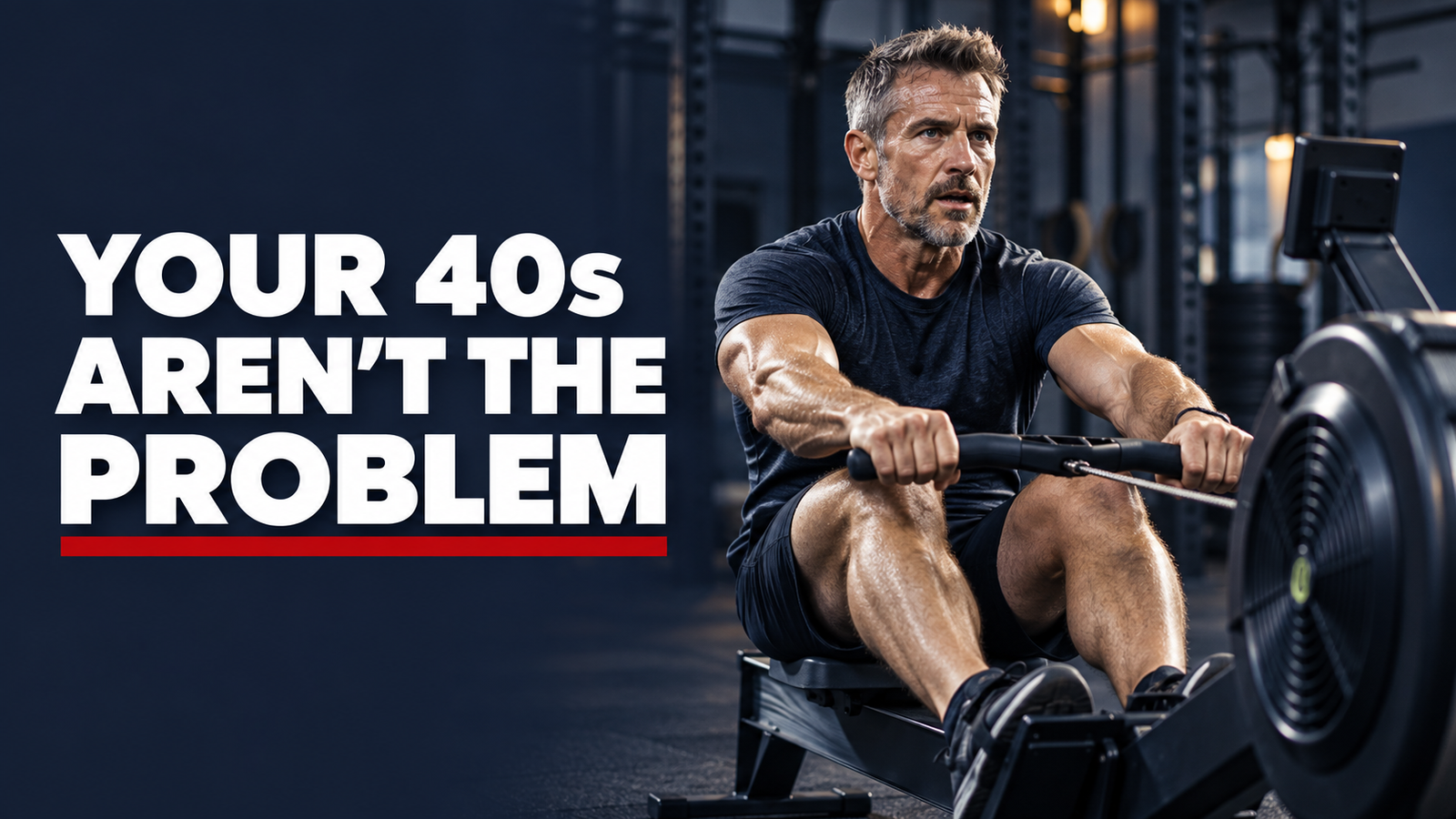
You wake up sorer than you used to. Your recovery between sessions feels longer. That PR from last year suddenly looks a lot further away. And somewhere along the line, you've probably told yourself the same story every hybrid athlete in their 40s and 50s tells themselves: this is just what getting older feels like.
Here's the problem. That story is usually wrong.
For most hybrid athletes training hard in midlife — balancing strength work, endurance training, and everything in between — the biggest barrier to performance isn't age. It's chronic underfuelling. Years of "eating clean," skipping meals to manage weight, or simply not eating enough to support the volume of training being done, catches up. And because the symptoms show up around the same time as birthdays start climbing, it's easy to blame the calendar instead of the fork.
Let's break down the three biggest myths keeping high-performing athletes from realising what's actually happening.
Myth #1 — "Declining Performance Is Just Part of Getting Older"
What's Actually Happening
Fatigue, slower recovery, flat training sessions, and stalled progress are real. But age alone doesn't explain them nearly as well as most people assume. These are also the exact symptoms of an athlete who isn't eating enough to support their training load — something incredibly common in driven, disciplined people who equate "eating less" with "eating well."
The Underfuelling Connection
When intake consistently falls short of output, the body starts making trade-offs. Recovery gets deprioritised. Hormone production gets deprioritised. Immune function gets deprioritised. None of this happens because you turned 42 — it happens because your body doesn't have enough raw material to keep every system running at full capacity while also training hard.
How to Turn This Around
The fix isn't complicated, even if it feels counterintuitive: eat enough to match your training demands, prioritise protein at each meal, and stop treating fatigue as a personality trait you now have to live with. Athletes who correctly fuel their training almost always find that the "age-related decline" narrative was masking a fixable fuelling gap.
Myth #2 — "Muscle Mass Automatically Declines After 35"
The Real Mechanism: Anabolic Resistance
It's true that muscle mass often starts dropping around this age if nothing changes — but the mechanism isn't a ticking biological clock. It's anabolic resistance: your muscles become less sensitive to the signals (protein intake, resistance training) that normally trigger muscle growth and repair. The signal still works. It just needs to be stronger and more consistent than it used to be.
Why This Matters for Hybrid Athletes
Hybrid training already asks a lot of your muscles — heavy lifting sessions alongside endurance work create high recovery demands. If protein intake hasn't been adjusted upward to overcome anabolic resistance, muscle maintenance (let alone growth) becomes an uphill battle, regardless of how hard you're training.
What You Can Do About It
This is a nutrition and training problem, not an inevitability. Increasing protein intake per meal, spreading it more evenly across the day, and keeping resistance training a non-negotiable part of your week all directly counter anabolic resistance. Muscle loss after 35 isn't a rule — it's a default outcome for people who don't adjust their inputs.
Myth #3 — "Testosterone Decline After 40 Is Inevitable and Unmanageable"
The Nuance Behind the Numbers
Yes, testosterone tends to decline gradually with age. But the size and speed of that decline is heavily influenced by lifestyle factors — training, sleep, stress, and especially nutrition. Framing it as an unstoppable countdown ignores how much control you actually have.
Training and Nutrition Levers That Matter
Resistance training is one of the most reliable natural levers for supporting healthy testosterone levels, particularly compound, heavy-load movements. Chronic underfuelling, on the other hand, does the opposite — it's one of the fastest ways to suppress hormone production, because the body reads energy deficit as a signal to conserve, not thrive.
The Role of Healthy Fats
Dietary fat isn't the enemy many "lean and clean" athletes treat it as. Healthy fats — from sources like oily fish, olive oil, nuts, and eggs — are directly involved in hormone production. Athletes who chronically under-eat fat while training hard are often unknowingly working against their own hormonal health.
Summary — What This Means for Your Training
If there's one thread running through all three of these myths, it's this: what looks like ageing is often just underfuelling wearing age's clothing.
- Declining energy and recovery are frequently a fuelling problem, not a birthday problem.
- Muscle loss past 35 is driven by anabolic resistance — a training and protein issue you can actively counter.
- Testosterone decline can be influenced by resistance training and adequate healthy fat intake, not just accepted as fate.
None of this means age has zero effect — it does. But for most hybrid athletes in their 40s and 50s, the gap between how they're performing and how they could be performing has far more to do with what's on their plate than what's on their birth certificate. Fuel properly, train smart, and you may find that "getting older" was never really the problem in the first place.

0 Comments